
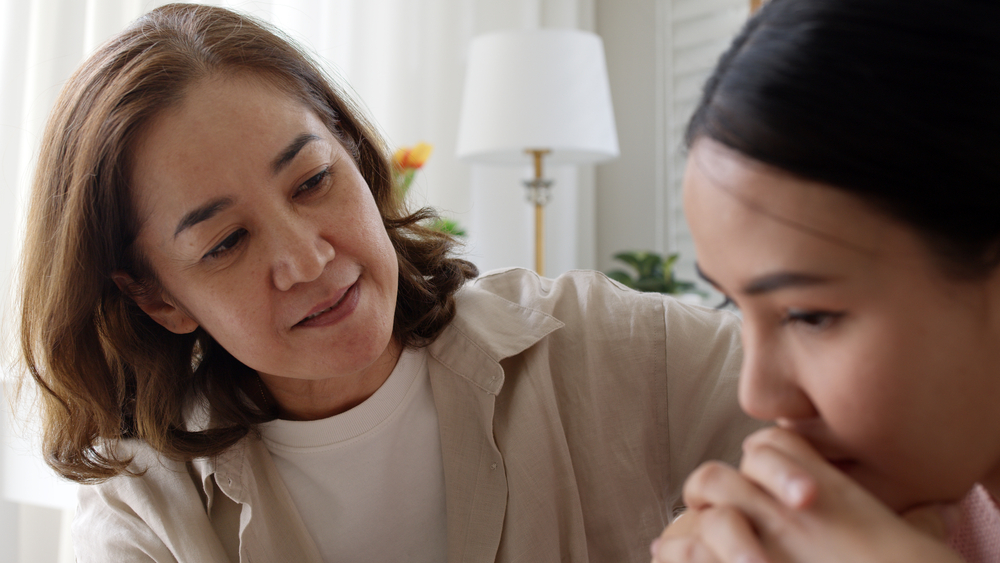
How to handle the awkwardness when grown-up children find it awkward to have heart-to-heart talks with their parents?
As children grow up, many parents may find that their children become increasingly resistant to having heart-to-heart talks. The children may feel awkward, or perhaps the family relationships have not been very close since childhood. Dr. Wong Chung Hin, a specialist in psychiatry, points out, “It is crucial for parents to establish a good parent-child relationship from an early age. If parents suspect emotional issues in their children, in addition to observing changes in their behavior, they can guide their children to express their thoughts and understand their inner world.” As mentioned earlier, parents and children should establish a parent-child relationship from a young age, setting aside time each day for parent-child communication and engaging in interesting family activities together. Dr. Wong emphasizes, “A close parent-child relationship helps children express themselves to their parents. Even as they grow older, they will be more willing to express themselves and have trust in their family.” However, if a child is unwilling to reveal their thoughts and parents notice changes in their behavior (refer to: https://www.parentsdaily.com.hk/expert/4073), Dr. Wong advises parents to patiently guide their children to express their inner feelings. “When children express their thoughts, parents should listen patiently and provide them with the opportunity to express themselves. Establish a daily parent-child chatting time, allowing children to have a channel to express themselves at home. Parents should remember that once children mention symptoms related to emotional issues, parents should not criticize or constantly deny their children.” Dr. Wong continues, “Everyone has their own thoughts

Apart from good grades and getting into a good school, what else does a child need?
Written by: Ms Carmen Leung (Teacher Car Car) Many parents often ask, “What is holistic education?” If we look at the profound wisdom of the Chinese people spanning thousands of years, it is about cultivating a child’s “virtue, intelligence, physical fitness, social skills, and aesthetics.” From the perspective of psychologists, it involves developing a child’s multiple intelligences. From an educational standpoint, it goes beyond the pursuit of knowledge; we also need to nurture a child’s values, attitudes, appreciation for art and culture, interpersonal skills, problem-solving abilities, and critical thinking. In simpler terms, from a commoner’s perspective, holistic education means enabling children to excel in academics, have many friends, possess positive thinking, and excel in various aspects such as music, sports, and art. Do you want your children to experience holistic development? Multiple intelligences are categorized into seven types, with innate and nurtured aspects each accounting for half. In common discourse, the concept of multiple intelligences is frequently mentioned. Let’s explore holistic education from a psychological perspective. The theory of “multiple intelligences” was proposed by Professor Howard Gardner of Harvard University in 1983. He discovered that intelligence could be classified into at least seven types: linguistic intelligence, logical-mathematical intelligence, spatial intelligence, musical intelligence, bodily-kinesthetic intelligence, interpersonal intelligence, and intrapersonal intelligence. When we discuss “intelligence,” parents often associate it with genius or innate talents. Is intelligence something one is born with, or is it developed later in life? In reality, an individual’s intelligence is a combination of innate and nurtured factors. Each

Storytelling education, what can parents do?
Written by: Senior Early Childhood Education Consultant, Miss Mok Loi Yan Many parents have asked me about storytelling topics that are challenging to explain to young children, such as stories involving death, like “The Little Match Girl,” or stories with violence, like “Little Red Riding Hood.” Due to the detailed depiction of events in the storybooks and lifelike illustrations, children may experience significant fear of death after listening to or reading such stories. They might be unable to express their inner discomfort, and some children even burst into tears after hearing these stories. What was originally meant to be an enjoyable parent-child storytelling time ends up having the opposite effect, triggering a heavy psychological burden on the children and leaving parents feeling guilty and unsure of how to handle the aftermath. Fewer Characters, Positive Plot I advise parents to start by selecting stories that are deemed suitable for a child’s mental and comprehension level from the vast array available in libraries. These stories typically have fewer characters, and a positive plot, and are easy for parents to use during interactive storytelling to help children understand causality and emotions. Stories with fewer characters allow children to focus more on understanding the transformation of the characters’ inner selves, behavior, and values within the story context. Choosing stories with a positive plot helps build qualities such as self-awareness, problem-solving skills, confidence, and analytical ability in children. These positive aspects counterbalance stories with negative themes, bad situations in stories, or the ability to face
How to cultivate a positive learning attitude in young children from an early age?
Source: Dr. LAU Yee-hung, Associate Professor and Deputy Head, Department of Early Childhood Education, The Hong Kong Institute of Education Many parents hope that their children will develop a love for learning from a young age. However, children don’t automatically develop a liking for learning; it requires parents to gradually nurture them, bit by bit. Encouraging Children in Interactions Children won’t initially learn to persevere on their own. It’s the parents’ responsibility to encourage them to persist in the process, instilling in them an anticipation of success. When a child succeeds, parents can review the past with them, allowing the child to feel the valuable outcomes achieved through perseverance and encouraging them to continue exhibiting positive behavior. Providing Intrinsic Motivation Often, children need some motivation to excel in certain tasks. Parents should emphasize what the child gains without making comparisons, such as satisfying their sense of achievement, enjoying the process of effort, and receiving appreciation from parents. This helps children experience the joy of learning and establishes intrinsic motivation, enabling them to engage in learning activities willingly from the heart. Parents set a good example Learning knows no age limits, and parents can demonstrate proactive learning and curiosity in front of their children. For instance, parents can learn to cook new dishes online, expressing to their children that, even if they don’t understand initially, they persevere and learn from various sources. Even if the outcome isn’t delicious, they commit to improving next time. Allowing children to see their parents’ initiative
Dual Efforts Lead to Faster and Better Learning for Children
Written by: Education Expert, Principal Kenneth Law We all understand that each student is an independent individual, so the speed of learning varies. However, if there are methods that can make children learn faster and better, it is undoubtedly something both parents and teachers would be pleased to see. How to help children learn faster and better is also a topic of research for many scholars. One key factor affecting the speed of a child’s learning is the amount of existing knowledge they possess. Existing knowledge refers to what the child has learned and mastered, not only the knowledge acquired in school but also part of the knowledge gained in daily life. Learning is like building a scaffold, gradually laying a solid foundation. Lev Vygotsky, a modern psychologist highly regarded, believes that the learning process is like constructing a “scaffold,” progressing from low to high, from small to large, using one metal rod at a time. The term “scaffold” is equivalent to the bamboo scaffolding commonly used by the Chinese. Of course, in the context of learning, it’s metaphorical. Describing learning as constructing a scaffold brings several insights. Firstly, laying a solid foundation is crucial. Secondly, learning must proceed step by step; if one rushes and neglects certain aspects, the knowledge won’t be firmly established. Furthermore, as long as one diligently learns step by step, they will surely accumulate more and more knowledge. Additionally, different individuals can construct different shapes of bamboo scaffolding, and knowledge is not static; it evolves

Enhancing Resistance through Lifestyle Habits
Written by: Registered Public Health Nutritionist (UK) and Nutritionist, Ng Pui Yu In my online community, parents often ask, “What should children with sensitive airways/frequent colds eat to strengthen their immunity?” When children are sick, it’s not only hard for them but also for parents who care for them day and night. There are many viruses that can cause colds, and since young children haven’t been exposed to them before, they haven’t developed the necessary antibodies, making them more susceptible to illness. It’s normal for young children to have 6 to 8 or even more colds in a year. Additionally, immune health is related to conditions like nasal sensitivity, airway sensitivity, and eczema. Of course, if lifestyle habits can be improved to enhance immunity, recovery from illness can be faster. Daily Exercise for a Strong Physique Today’s children lead busy lives, attending school, extracurricular activities, and tutoring classes daily. Moreover, most parents work full-time, limiting the opportunities for their children to engage in physical activity. Besides paying attention to a child’s diet, it is crucial for parents to schedule 30 to 60 minutes of exercise for their children each day. Even activities like running, climbing, playing on slides, and swinging in the park are sufficient. Developing a habit of regular exercise should start from a young age. The author’s child, during the school years, has already begun the practice of going to the park 1 to 2 times a day, adapting to indoor playrooms on extremely hot or rainy days.

Reject the Busyness: Build Parent-Child Relationships Every Day
arents should first handle their own emotions to help their children express their inner feelings. Whether parents are working or full-time homemakers, they are busy every day with work, household chores, and taking care of their children. After school, children are also busy with homework, tutoring, and reviewing for exams. Leisure time is limited, and bedtime comes early. Dr. Wong Chung Hin, a specialist in psychiatry, points out, “Parents and students in Hong Kong are very busy, but we need to learn to ‘preprocess’ emotions or stress before they erupt, and establish a good parent-child relationship. Parents should set aside dedicated parent-child time every day to communicate with their children. Parents should also take care of their own emotions, which will help their children express their inner feelings.” In the midst of busy daily life, parents need to take good care of themselves first in order to better care for their children. Dr. Wong suggests, “Rather than dealing with emotional problems after they arise, ‘preprocessing’ is more important. Parents can establish healthy habits with their children, ensuring they have sufficient rest. Many students have tutoring and homework to do after school, but a moderate amount of entertainment is also crucial. As mentioned earlier, daily parent-child communication time is necessary. Doing fun activities together, such as exercising, not only builds quality parent-child time but also improves emotions.” Dr. Wong emphasizes, “Parents should review their disciplinary expectations, adjust disciplinary methods according to their children’s abilities to avoid putting too much pressure on
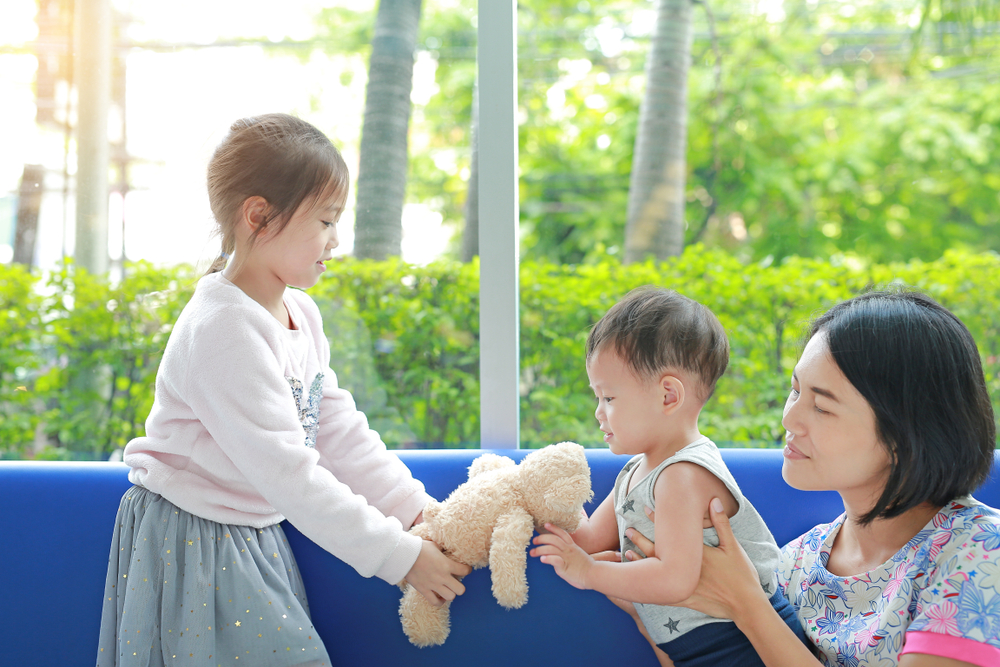
Willing to share – Parents set an example
Written: Education expert, Cheung Wai Ching The crow accidentally found a piece of soap. After washing its feathers in the basin, the crow became fragrant all over. Deciding to share this soap with other animals, the mouse, rabbit, little monkey, and big bear all took turns using it. Finally, it was the elephant’s turn. After the elephant finished bathing, the soap was nowhere to be found. The crow found it strange and anxious, thinking the elephant was playing a joke on it. The crow, with a kind heart, shared its good thing with its friends, but in the end, the item was gone. We all know that soap gets smaller as it is used, which is an inevitable fact. The crow didn’t expect that its well-intentioned sharing would result in losing what it originally possessed. Although the crow was a bit reluctant to part with its soap, when it smelled the soap fragrance emanating from its good friends, it felt happy and thought it didn’t matter. With an increasing number of single-child families in society, coupled with busy parents compensating with material things, children tend to think that everything is for their exclusive enjoyment, and others are not allowed to touch. In such situations, what can parents do? The joy of sharing is an abstract emotion that requires the accumulation of years along with the experiences of many life events. It is not something that can be achieved overnight. The most effective education on sharing comes from the example set
Don’t treat books as miracle cure
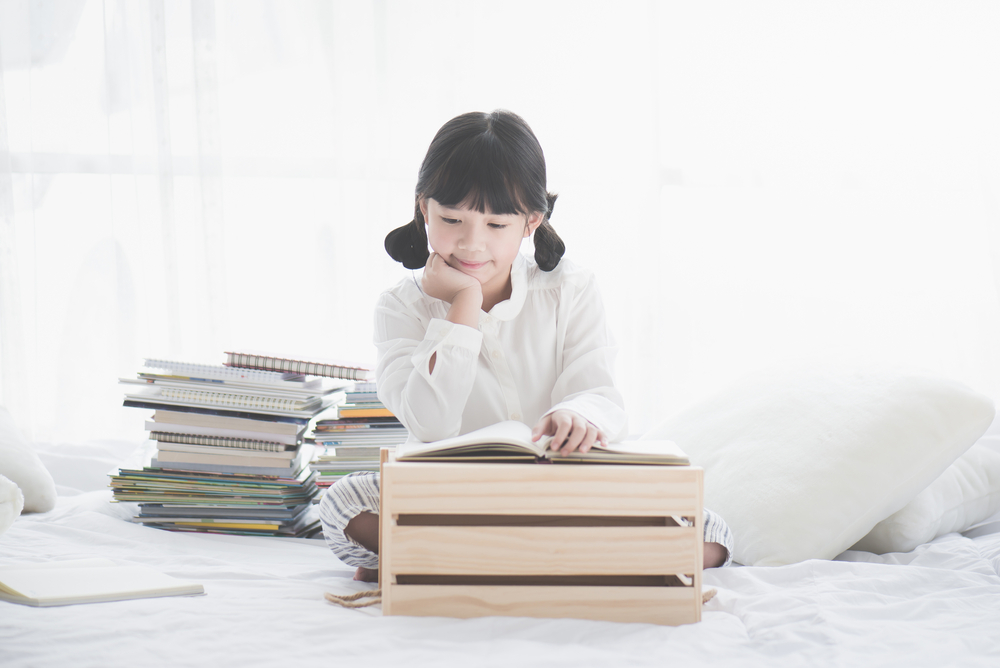
Parent-child reading senior worker: Choi EE Do parents face many issues when it comes to shared reading? One common issue I often share with parents is that when their children encounter problems like bedwetting or fear of the dark, they often ask me, ‘Is there a book that can help them solve this problem?’ In the context of shared reading, we purposefully use a book to influence the child, hoping it will eliminate their fears, stop bedwetting, or improve their performance. In reality, this goal can create more pressure on the child. Think about it; if a child frequently feels fear and is apprehensive about new environments, the stories in books are meant to help them relax and reassure them that they are not alone in feeling fear. Many friends feel the same way. But how do we address this issue? Instead of seeking a specific book to help the child, we should focus on addressing the child’s psychological or physiological issues. If a child has many inner fears or psychological issues, we should address the psychological problems first. For example, if a mom from my reading group tells me that her child occasionally wets the bed at night, we should try to understand the reasons behind it. Is it because the child forgot to go to the bathroom? Or did they drink too much water before bed? If it continues, I believe it’s important to consult a doctor rather than relying on a book to solve the issue. We

The four major preparations for enrolling in first grade
Source: Senior Parenting Education Expert Bally In fact, preparing for the transition to first grade can be more stressful and time-consuming. If you were to ask me, I would recommend that parents should start from Pre-Nursery to “analyze first and then plan.” But how to analyze first? Many parents are not entirely clear about the various types of schools in Hong Kong. For instance, we have traditional government-subsidized schools, Direct Subsidy Scheme (DSS) schools, private schools, and international schools. What are the differences between these types of schools? What are their educational philosophies? What is the ideal type of school for parents based on their financial situation and aspirations? They should first understand and analyze this, which will give them a goal. Once they have a goal, we can move on to the next step, which is to personally attend the orientation sessions of each school. Why do we believe that parents should start preparing from Pre-Nursery (PN)? Because many schools often hold orientation sessions only once a year. These orientation sessions often occur at the same time. If we wait until the year of K2 to attend these sessions, and we are interested in three different schools, and all of them schedule their sessions on the same Saturday at the same time, parents may miss out. Secondly, it’s important to note that these orientation sessions have limited spots. While many people may sign up, there are often only a few hundred to a thousand slots available. During the course